

Tag: Texas businesses

  • How to Find Reliable Local Businesses in Texas: A Practical Guide

    How to Find Reliable Local Businesses in Texas: A Practical Guide

    Finding the right local business can make all the difference, whether you’re hiring a contractor, choosing an insurance provider, looking for a reliable mechanic or searching for a professional service.

    Texas is home to an enormous variety of businesses, from independent family-owned operations to established regional service providers. With so many choices available, knowing which business to trust isn’t always straightforward.

    A polished website or a five-star review might create a good first impression, but neither guarantees a positive experience.

    The good news? With a little research and the right questions, you can make better decisions and avoid many common frustrations.

    Here’s a practical guide to finding reliable local businesses in Texas.

    1. Start Your Search Locally

    When searching for a business, location matters more than many people realise.

    A service provider based in your city or surrounding area may offer practical advantages, including easier communication, shorter travel distances and greater familiarity with local conditions.

    For example, homeowners in Houston might prefer roofing contractors familiar with Gulf Coast storms and heavy rainfall. Someone in Austin looking for a landscaper may benefit from a business that understands the region’s climate, soil and water restrictions.

    If you’re planning a home improvement project, you can browse Construction & Trades businesses in Austin to discover local service providers.

    Local knowledge can be valuable, particularly when choosing businesses that provide ongoing services.

    Where should you start?

    • Search for businesses in your city or surrounding communities.
    • Explore local business directories.
    • Ask friends, neighbours or colleagues for recommendations.
    • Compare several businesses offering similar services.
    • Check whether the business serves your specific neighbourhood.

    Online directories such as BigTexHub can help you discover businesses serving Texas and explore their services and contact information.

    The goal isn’t necessarily to find the closest business. It’s to find one that combines convenience, relevant experience and dependable service.

    2. Look Beyond Star Ratings

    Customer reviews can be useful, but the overall rating rarely tells the whole story.

    A business with hundreds of glowing reviews may appear more trustworthy than one with only a handful. However, the quality, consistency and relevance of those reviews often matter more than the headline number.

    Before making a decision, spend a few minutes reading what customers actually say.

    Look for comments about:

    • Whether the business completed work as promised.
    • How staff handled questions or problems.
    • Whether pricing matched the original estimate.
    • The quality of the final product or service.
    • How the business responded when something went wrong.

    A company that occasionally receives negative feedback isn’t necessarily unreliable.

    In fact, the way a business responds to criticism can reveal a great deal about its customer service.

    Practical tip: Look for patterns across multiple reviews and platforms rather than relying on one particularly positive or negative experience.

    Also pay attention to the dates. A business may have built a strong reputation years ago, but recent customer experiences can provide a more useful picture of its current performance.

    3. Verify the Business Before Spending Money

    One of the most important steps when choosing a local business is confirming that it operates legitimately.

    This becomes particularly important when you’re hiring someone to work on your home, provide financial services, handle sensitive information or perform specialised work.

    Start by checking the basics.

    Does the business have a consistent name, phone number and contact information? Does it provide a clear description of its services? Can it explain its experience and qualifications?

    Depending on the business type, you may also want to confirm its registration, licensing or insurance.

    Useful Texas verification resources

    Texas Secretary of State

    The Texas Secretary of State provides resources for searching business filings and entity information.

    Remember that not every legitimate business operates as a registered corporation or LLC. Some operate as sole proprietorships, and registration alone does not establish reliability.

    Texas Department of Licensing and Regulation

    The Texas Department of Licensing and Regulation allows consumers to check licences for professions and industries regulated by that agency.

    Other occupations may be regulated by different state boards or agencies.

    Local licensing requirements

    Requirements can vary by profession and location. For example, Texas does not have a general statewide licence for every type of construction contractor, although particular trades and local activities may require licences or permits.

    When in doubt, ask the business which credentials apply and verify them with the relevant authority.

    Spending a few minutes checking credentials could prevent expensive problems later.

    For financial services, you can explore Finance & Insurance businesses in Dallas and then verify any relevant professional credentials before making a decision.

    4. Compare More Than Just the Price

    Everybody appreciates a good deal, but choosing the cheapest provider isn’t always the smartest decision.

    Imagine receiving three quotations for a home improvement project.

    One business quotes $2,000, another $2,800 and the third $3,100.

    It’s tempting to choose the $2,000 offer immediately.

    But what if that quotation excludes materials, disposal costs or work included in the others?

    The lowest price might become the most expensive option once everything is considered.

    When comparing quotations, ask:

    • What exactly is included in the price?
    • Are there additional charges or exclusions?
    • What materials or products will be used?
    • How long will the work take?
    • Is there a warranty or service guarantee?
    • What happens if something goes wrong?

    For larger projects, request a written quotation that clearly describes the work.

    The Texas Department of Insurance recommends obtaining multiple written bids when hiring contractors, especially following storm damage.

    Practical tip: Compare the overall value, not just the final dollar amount.

    A slightly more expensive provider offering better communication, appropriate insurance and clearly defined work may ultimately provide better value.

    5. Pay Attention to Communication

    Good communication is one of the simplest indicators of how a business treats potential customers.

    Consider your initial interaction.

    Did someone answer your questions clearly? Did they respond within a reasonable time? Were they willing to explain their services, pricing and availability?

    A business doesn’t need to respond instantly to every enquiry, particularly if it’s a small operation where the owner is doing the work personally.

    However, professional communication should give you confidence that your enquiry is being taken seriously.

    Be cautious if a business:

    • Refuses to provide basic information about its services.
    • Avoids answering reasonable questions about pricing.
    • Pressures you to make an immediate decision.
    • Makes promises that seem unrealistic.
    • Changes important details without explanation.

    A dependable business should be comfortable discussing expectations before work begins.

    6. Check Experience That Matches Your Needs

    Not every business offering a particular service has experience with every type of project.

    A contractor specialising in small residential repairs may not be the right choice for a major commercial renovation.

    Likewise, an accountant serving individual taxpayers may not have the same experience as a firm handling complex business accounts.

    Before choosing a provider, ask about work similar to what you need.

    For example:

    Hiring a contractor? Ask whether they’ve completed comparable projects and whether they can provide relevant references.

    Choosing a marketing agency? Ask for examples of campaigns they have managed for businesses of a similar size.

    Looking for an IT service provider? Ask which platforms, systems and business environments they support.

    Searching for an automotive repair business? Ask about experience with your vehicle’s make and model.

    The same principle applies to personal care. When researching providers, explore Health & Wellness businesses in Houston and compare their services with your individual requirements.

    Relevant experience matters more than broad claims of expertise.

    7. Watch for Common Warning Signs

    Most business interactions are straightforward, but consumers should remain alert to misleading claims and potential scams.

    The Texas Attorney General’s Consumer Protection division provides information about common scams affecting consumers.

    Some warning signs include:

    • Unexpected offers that seem too good to be true.
    • Demands for full payment before any work begins.
    • Requests to send money through unusual or difficult-to-recover payment methods.
    • Pressure to sign documents immediately.
    • Refusal to provide written terms for substantial work.
    • Unsolicited requests for sensitive personal or financial information.

    A request for a deposit isn’t automatically suspicious. Deposits are common in some industries, particularly where businesses must order materials or reserve time.

    What matters is whether payment terms are reasonable, explained clearly and documented.

    If something feels inconsistent, ask more questions before proceeding.

    For major purchases or projects, keeping written records of quotations, invoices, agreements and communications can also help resolve misunderstandings.

    8. Support Local Businesses Without Compromising on Quality

    Choosing a local business isn’t simply about convenience.

    Local businesses contribute to their communities by providing employment, purchasing supplies, offering specialised services and supporting other nearby businesses.

    A small family-owned company may also provide a level of personal attention that’s difficult to replicate at scale.

    But supporting local businesses doesn’t mean accepting poor service or overlooking important checks.

    The best approach is to combine local discovery with thoughtful comparison.

    Give independent businesses an opportunity to earn your trust, just as you would any larger company.

    You may discover excellent service providers that don’t have enormous advertising budgets or prominent search engine positions.

    9. Use Business Directories as a Starting Point

    Search engines are useful, but sometimes finding a relevant local service provider means looking beyond the first few search results.

    Business directories offer another way to discover businesses by category, location or service.

    For example, you might be looking for:

    • A home improvement specialist in Dallas.
    • An independent accountant in Austin.
    • A cleaning service in Houston.
    • An automotive service provider in San Antonio.
    • A local business serving Fort Worth.

    For example, if you’re planning a meal out, you can browse Food & Drink businesses in Austin to discover local restaurants and dining options.

    Instead of relying on one search result, a directory can help you identify potential providers and explore their business profiles.

    BigTexHub is designed to make businesses serving Texas easier to discover.

    Business owners can publish information about their services, locations and contact details, while visitors can browse listings and find businesses relevant to their needs.

    Of course, being listed in a directory doesn’t guarantee that a provider is licensed, qualified or suitable for every job.

    Treat directory listings as a discovery tool and apply the same verification steps you would anywhere else.

    10. Make a Confident Final Decision

    Once you’ve researched your options, choosing a business becomes much easier.

    Before making your final decision, consider these five questions:

    1. Does the business provide the service I actually need? Make sure its experience and capabilities match your requirements.
    2. Have I checked its reputation? Look at reviews, recommendations and recent customer feedback.
    3. Have I verified relevant credentials? Confirm licences, insurance or other qualifications where appropriate.
    4. Do I understand the costs and terms? Make sure quotations, timelines and expectations are clear.
    5. Am I comfortable with the communication? You should feel confident asking questions and raising concerns.

    You don’t need to spend days researching every routine purchase. The amount of checking should reflect the potential cost and risk.

    Hiring someone for a small, straightforward task is very different from selecting a contractor for a major renovation.

    Use your judgment and invest more time when the stakes are higher.

    Finding the Right Local Business Starts with Better Information

    Texas offers an extraordinary variety of local businesses, with talented entrepreneurs and service providers working across virtually every industry.

    Finding the right one doesn’t have to be difficult.

    Start locally, compare your options, read customer feedback carefully and verify important details before making a commitment.

    A little research today can save considerable time, money and frustration tomorrow.

    Looking for a business in Texas?

    Explore BigTexHub to discover businesses, browse services and connect with providers serving communities across the Lone Star State.

    And if you’re a Texas business owner, you can also create a free business listing and help more customers discover what you offer.
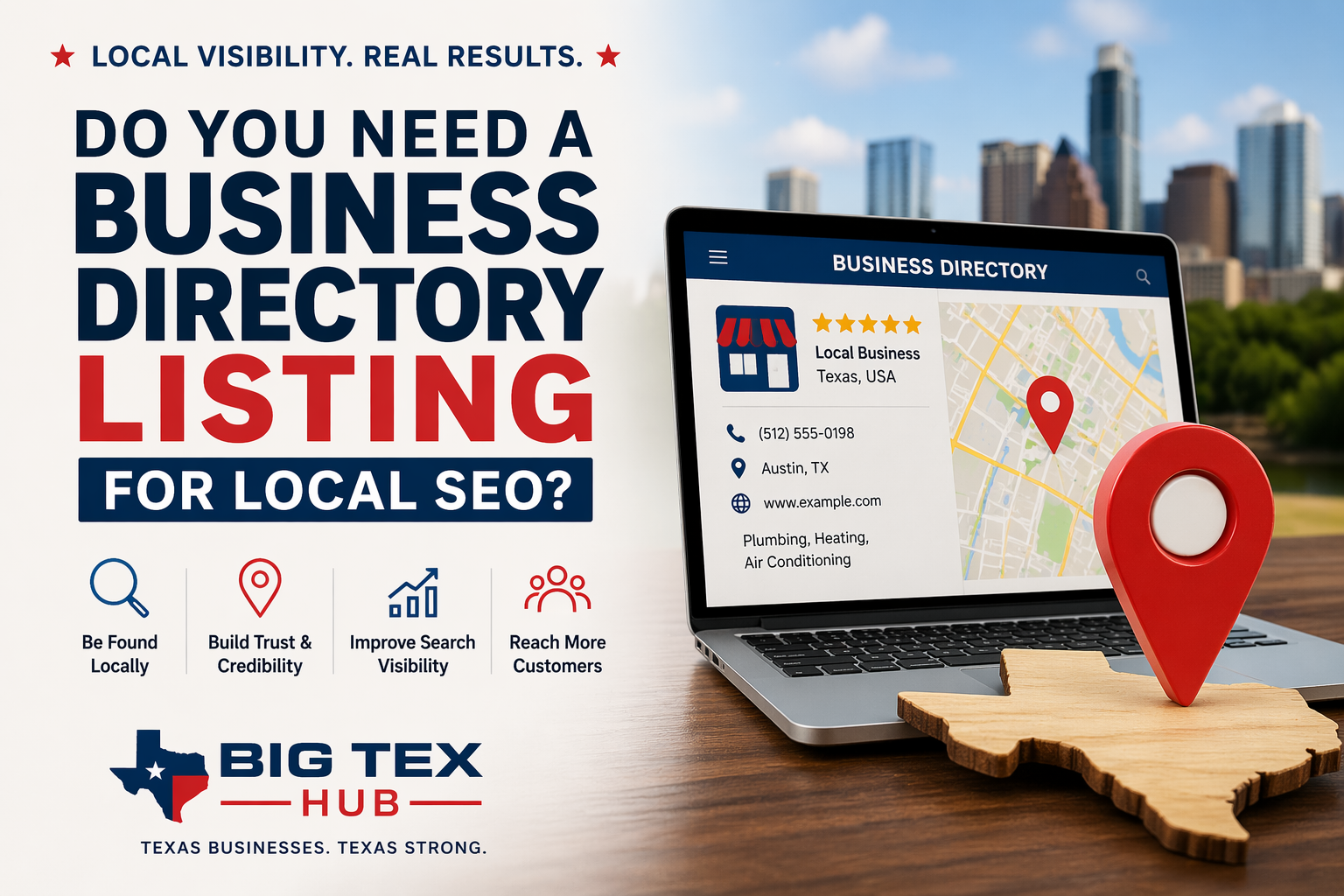

  • Do You Need a Business Directory Listing for Local SEO?

    Do You Need a Business Directory Listing for Local SEO?

    If you’re trying to improve your visibility in local search results, you may be wondering whether listing your business in a directory actually makes a difference.

    Business directories are often one of the first steps businesses take when building an online presence. But do they really help with local SEO?

    In this guide, we’ll break down when a business directory listing is useful — and what to expect from it.


    What Is a Business Directory Listing?

    A business directory listing is an online profile that includes your business name, location, contact details, and services. These listings help customers discover businesses when searching for services in a specific area.

    Directories can be general or location-based, such as those focused on Texas businesses.


    How Business Listings Support Local SEO

    Business directory listings help support local SEO in a few key ways:

    • They make your business easier to find online
    • They provide consistent business information across the web
    • They help customers discover services in specific locations
    • They add credibility through public listings

    While a single listing won’t dramatically change rankings, consistent presence across directories can strengthen your overall visibility.


    When a Directory Listing Is Most Useful

    A directory listing is especially useful if:

    • Your business is new and building an online presence
    • You want to reach local customers in your area
    • You don’t yet have strong visibility in search results
    • You want an easy way to share your business information

    Common Misconceptions About Directory Listings

    Some businesses expect immediate results from a single listing, but that’s not how it works.

    A directory listing supports your overall presence — it doesn’t replace your website or other marketing efforts.

    The value comes from consistency, accuracy, and visibility over time.


    How to Get the Most Value from Your Listing

    To make your listing effective:

    • Complete all business details
    • Choose the correct category
    • Keep your information updated
    • Add clear descriptions of your services

    These steps help improve both visibility and user trust.


    Should You List Your Business in a Texas Directory?

    If your target customers are based in Texas, using a directory focused on Texas businesses can help connect you with more relevant local traffic.

    Directories that are location-specific often provide better visibility for regional searches.


    Ready to List Your Business in Texas?

    If you want to improve your visibility and make it easier for customers to find your business, listing your business in a directory is a practical step.

    You can learn how to list your business on Big Tex Hub to get started.

  • How to List Your Business in a Texas Business Directory (Step-by-Step)

    How to List Your Business in a Texas Business Directory (Step-by-Step)

    If you want more customers in Texas, one of the simplest ways to improve your visibility is by listing your business in a local directory. Many customers search online for services nearby, and directories help connect them with businesses quickly.

    In this guide, we’ll walk through how to list your business in a Texas business directory step by step.


    Why Listing Your Business in a Directory Matters

    Before getting started, it’s important to understand why this matters.

    A business directory helps your company:

    • Get discovered by local customers
    • Improve your online presence
    • Build credibility with a public listing
    • Make it easier for customers to contact you

    For many businesses, this is one of the easiest ways to start getting noticed online.


    Step 1 – Choose the Right Business Directory

    Start by selecting a directory that focuses on your target audience.

    For Texas-based businesses, using a directory that focuses on Texas helps ensure your listing reaches local customers rather than a broad, less relevant audience.


    Step 2 – Create Your Account

    Most directories require you to create an account before adding a listing.

    This usually involves:

    • Signing up with your email
    • Verifying your account
    • Accessing your dashboard

    Step 3 – Add Your Business Information

    This is the most important step.

    Make sure your listing includes:

    • Business name
    • Description of your services
    • Contact details
    • Location or service area
    • Relevant categories

    Accurate and complete information makes it easier for customers to find and trust your business.


    Step 4 – Select the Right Category

    Choosing the correct category helps your business appear in relevant searches.

    Take time to select the category that best matches your services so customers can find you when browsing or searching.


    Step 5 – Submit and Review Your Listing

    Once your information is complete, submit your listing.

    Some directories review submissions before publishing to ensure quality and accuracy.


    Common Mistakes to Avoid

    When listing your business, avoid:

    • Incomplete or missing information
    • Choosing the wrong category
    • Outdated contact details
    • Very short or unclear descriptions

    These issues can reduce your visibility and credibility.


    What to Do After Your Listing Goes Live

    After your listing is published:

    • Keep your information updated
    • Add images if possible
    • Monitor how customers interact with your listing

    Keeping your listing active and accurate helps improve long-term results.


    Ready to List Your Business in Texas?

    Listing your business is a simple step that can improve visibility and help you connect with more customers across Texas.

    If you’re ready to get started, you can learn how to list your business on Big Tex Hub.

  • What Makes Big Tex Hub Different from Other Directories?

    What Makes Big Tex Hub Different from Other Directories?

    Online directories are everywhere—Google, Yelp, you name it. So why choose Big Tex Hub? Built by SocialSimplified, this platform isn’t just another listing site; it’s a Texas-focused game-changer. With a free tier that’s free forever and special perks for the first 100 founding members, Big Tex Hub stands apart from the crowd. Let’s break down what sets it apart and why it’s the smart move for Texas businesses looking to grow.

    Texas Roots, Texas Focus


    Most directories cast a wide, generic net. Big Tex Hub zeroes in on Texas businesses, connecting you to local customers who matter most. Whether you’re in El Paso or Tyler, your free listing targets the Lone Star State, not the whole world. SocialSimplified designed it this way—because a Dallas plumber doesn’t need leads from New York. That hyper-local edge makes all the difference.

    Free Forever, Not a Teaser


    Unlike other platforms that lure you in with free trials only to charge later, Big Tex Hub’s free tier stays free—period. Your listing, with business details and services, costs nothing to maintain. The first 100 founding members get extra benefits, like priority when we launch featured listings down the road. It’s a no-risk deal that keeps delivering, unlike the paywalls you’ll hit elsewhere.

    Built for You, Not the Masses


    Big directories often prioritize big spenders or drown you in cluttered results. Big Tex Hub is lean and purposeful, built to help Texas businesses shine. Signing up is easy—use our website form or email “I’m interested,” and we’ll set you up fast. For the first 100, founding member status adds VIP flair. It’s your platform, tailored to your state, your way.

    Join a directory that’s different—get your free listing at List your Business or email [email protected].

  • How Big Tex Hub Helps Texas Businesses Stand Out

    How Big Tex Hub Helps Texas Businesses Stand Out

    In a state as big and bustling as Texas, standing out as a business isn’t easy. From San Antonio’s vibrant markets to Amarillo’s wide-open plains, competition is fierce, and customers have endless options. Big Tex Hub, built by SocialSimplified, changes that. With a free tier designed for Texas businesses, this platform puts you in front of locals who need your services—without breaking the bank. The first 100 to join even snag founding member perks, giving you an edge in a crowded market. Here’s how Big Tex Hub helps your business rise above the noise.

    Breaking Through the Texas Crowd
    Texas has over 30 million people and counting, all looking for goods and services daily. A free listing on Big Tex Hub makes you visible to this massive audience, no advertising budget required. Your profile—complete with business details and contact info—acts like a beacon for locals searching for what you offer. For the first 100 founding members, that visibility comes with priority placement and early access to future features like featured listings. It’s a simple, cost-free way to cut through the clutter and get noticed.

    Local Focus, Big Impact
    Unlike generic directories, Big Tex Hub is built for Texas businesses. That means your listing targets the right crowd—people in your community who are ready to buy. Whether you’re a Houston landscaper or an Austin boutique, this platform connects you to customers nearby. SocialSimplified’s free tier keeps it accessible, while founding members get a head start on building their local reputation. It’s not just about being seen; it’s about being seen by the right people.

    No Cost, All Reward
    Why pay for exposure when you don’t have to? Big Tex Hub’s free listings level the playing field, letting small businesses compete with bigger names. Sign up via our website form or email “I’m interested,” and our team will get you live fast. The first 100 get founding member status—think VIP treatment when we roll out upgrades. Join today, stand out tomorrow, and grow your Texas business without spending a cent.

    Call-to-Action
    Ready to stand out? Get your free listing at List your Business or email [email protected]. Be one of the first 100 for founding member perks!

  • Why Texas Businesses Need a Free Listing on Big Tex Hub

    Why Texas Businesses Need a Free Listing on Big Tex Hub

    Running a business in Texas comes with big opportunities—and fierce competition. Whether you’re a retailer in Austin, a contractor in Dallas, or a freelancer in Houston, getting noticed by local customers is essential for growth. That’s where Big Tex Hub comes in. Built by SocialSimplified, this platform offers a free tier to help Texas businesses connect with their community at no cost. Even better, the first 100 businesses to join become founding members with priority perks. Here’s why a free listing on Big Tex Hub is a game-changer for your business—and how to claim yours today.

    The Power of Local Visibility


    Texas is massive—both in size and economic potential. With millions of customers across the state, standing out can be tough. A free listing on Big Tex Hub puts your business front and center for locals searching for your services, whether it’s plumbing, pastries, or anything in between. Unlike expensive ads, our free tier offers a no-risk way to boost your visibility. For the first 100 founding members, that means early exposure and an edge when we introduce featured listings later. It’s your chance to shine in a crowded market without spending a dime.

    Why Free Makes Sense for Texas Businesses

    Budgets matter, especially for small businesses. That’s why Big Tex Hub provides free listings that stay free forever—no hidden fees, no surprises. SocialSimplified created this platform to level the playing field, letting you compete with bigger players. Your free listing includes your business details, contact info, and services—everything locals need to find and choose you. The first 100 founding members also get priority access to future upgrades like featured listings. It’s a low-effort, high-reward way to grow your reach across Texas.

    How to Get Started

    Joining is simple. Visit our website form or reply to our email with “I’m interested,” and we’ll take care of the rest. Our team will set up your free listing quickly, so you’re live on Big Tex Hub in no time. Whether you’re a business owner or service provider in Texas, this is your opportunity to connect with customers who need you. The first 100 spots are limited, and founding members get VIP treatment—so don’t wait. Claim your free tier today and grow with us!


    Sign up for your free listing now—visit List your Business or email [email protected].